Building Strong Foundations: The Life-Changing Power of Daily Tummy Time
December 2025
When you first hear about tummy time, it might sound like just another item on your newborn checklist. But here's what many parents don't realize: those precious minutes your baby spends on their belly are quietly building the foundation for everything from their first steps to their future success in school. The research is clear—tummy time isn't optional, it's essential. And the way you approach it from day one can make all the difference.
Let's talk about what tummy time really looks like in practice. Forget the image of a baby lying alone on a play mat for long stretches. Real tummy time starts with you and your baby, chest to chest, having conversations. From birth, place your newborn on your chest while you're slightly reclined. Talk to them, sing to them, make faces—anything that encourages them to lift their head to find your voice and face. These micro-moments matter enormously.
As research from Hewitt demonstrates, "time spent prone (on the tummy) is the greatest predictor of future motor development success." But here's the crucial part: we're talking about accumulation through frequency, not duration.
Think of it this way—after every single nappy change, place your baby on their tummy for just 10 seconds to one minute. That's 20-30 tiny sessions throughout the day. By the end of 24 hours, you've accumulated significant tummy time without any tears or distress. This approach builds tolerance gradually and naturally.
Your goal isn't one 60-minute marathon session (which would be overwhelming for most babies). Instead, you're creating a rhythm of brief, positive experiences that add up to substantial developmental benefits. By three months, those accumulated micro-sessions should total 30-45 minutes daily. By six months, you might reach 60 minutes total—but always distributed across many short bursts.
Every time you place your baby on their tummy, you're activating a sophisticated developmental process. Let's break down what's actually occurring during those seemingly simple moments.
The suboccipital muscles at the back of your baby's neck are among the first to develop strength. When your baby lifts their head during tummy time, they're not just looking around—they're developing the muscular foundation for everything that follows. This isn't just physical conditioning; it's neurological preparation.
From a chiropractic perspective, tummy time helps to promote proper function of the neurospinal system, which in turn supports the healthy development of the brain and nervous system. When babies spend time on their tummies, the neurospinal system is placed in a position that facilitates the optimal flow of cerebrospinal fluid.
By around 12 weeks, those accumulated tummy time sessions should result in strong, confident head control. This isn't just a cute milestone—it's a neurological achievement. Your baby's neck and shoulder girdle muscles, along with their spinal extensor muscles, have developed enough strength to support purposeful movement.
This foundation becomes critical for the next phases: sitting control and rolling over at 5-6 months.
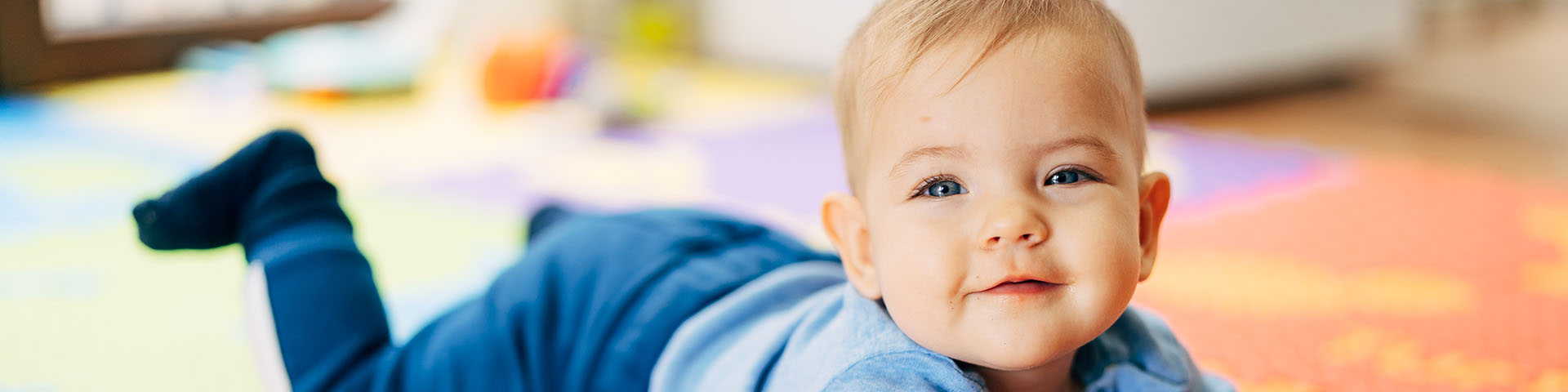
Around three months, tummy time evolves into something that looks remarkably like a baby gym session. Watch your baby now—they're essentially doing modified push-ups. Their upper body rests on tucked-in arms and elbows, their pelvis engages the floor, activating core muscles and developing postural control and balance.
Notice how your baby's hands begin to open up and flatten against the floor. Their thumbs start pushing down—this is the integration of the palmar grasp reflex happening in real time.
Similarly, their feet begin to push or dig into the floor, with big toes pressing down. You're witnessing the integration of plantar and Babinski reflexes.
Watch as your baby's head flexes and extends (looking up and down) and moves side to side. These movements are integrating the Tonic Labyrinthine Reflex (TLR) and Symmetrical Tonic Neck Reflex (STNR).
This isn't random movement—it's sophisticated neurological programming preparing your baby for mobility.
When your baby develops sufficient tummy time strength and control, rolling becomes possible. And rolling isn't just about getting from point A to point B—it's a neurological milestone that triggers the integration of multiple primitive reflexes including the Spinal Galant, Perez, and Moro reflexes.
Rolling also provides crucial vestibular stimulation, further supporting brain development. Criss-cross crawling stimulates the corpus callosum to develop in a balanced way, facilitating the hemispheres of the brain to communicate.
By the time your baby begins crawling, something remarkable has occurred. Through consistent tummy time practice, many primitive reflexes have integrated, clearing the path for higher motor networks and frontal cortex development.
Crawling plays a vital role in the early stages of human brain development, laying the foundation for various cognitive and motor skills. As infants begin to crawl, they engage in a complex process of sensory exploration and integration. The research shows that crawling also fosters the growth of the corpus callosum, a bundle of nerve fibers that connects the two brain hemispheres, promoting communication and information exchange between brain regions.
Understanding this progression helps explain why those early tummy time sessions are so crucial. Each minute spent developing strength and reflex integration is building toward this sophisticated neurological achievement.
Here's where the story gets truly exciting. The motor development supported by tummy time doesn't just affect physical milestones—it shapes cognitive development too.
Research demonstrates a close relationship between motor and cognitive development. When children engage in motor activities, they're not just using the motor cortex; they're also activating the prefrontal cortex. For example, when a child plans how to navigate an obstacle course, they're using their motor cortex to execute movements while relying on the prefrontal cortex for planning and problem-solving.
The evidence shows that children who crawl longer and achieve motor milestones appropriately demonstrate:
A significant study found that over half of preschoolers tested had at least residual primitive reflexes, and one-third of children had delayed psychomotor development. The study concluded that testing and reflex integration therapy could prevent "many difficulties which children can encounter within their social and school life."
Choose moments when your baby is alert but content. Right after nappy changes works perfectly—your baby is clean, comfortable, and likely awake. Avoid times immediately after feeding (wait 30-45 minutes to prevent spitting up) or when your baby is overly tired or hungry.
Get down to your baby's level. Make eye contact, chat, sing, or make silly faces. Use colorful toys placed just out of reach to encourage reaching and head lifting. Remember, you're not just building physical strength—you're creating positive associations with this position.
Try different textures and locations. A soft blanket on the floor, a firmer play mat, even outdoor surfaces (weather permitting) provide varied sensory experiences that support development.
If your baby consistently resists tummy time despite gradual introduction, don't give up. If your baby despises tummy time and consistently fusses when put on their belly, then consider seeing a paediatric chiropractor or osteopath. Just like adults, babies can experience back and neck pain. This pain can impair their ability to comfortably move their bodies or lay in certain positions like tummy time.
Paediatric chiropractic treatment has been reported to improve baby's positioning, neck range of motion, time spent in prone position (tummy time), and infant pain.
Today's parents face unique challenges. Research suggests that screens and other modern conveniences may be partly to blame for retained reflexes. "Babies need experiences and stimulation," and they need more tummy time, fewer screens, and need to be put on the floor instead of a bouncy chair, car seat or upright stroller so they can move more freely.
The key is reducing "container time"—those periods when your baby is strapped into car seats, bouncy chairs, or other devices. While these have their place, balance is crucial. The more time on the floor exploring movement, the better.
What we're really talking about is optimal brain development during the most critical period of your child's life. As demonstrated by scientific research, crawling sets the stage for improved brain connectivity, essential motor skills, and spatial awareness.
The motor cortex development that begins with tummy time establishes pathways that support not just physical coordination, but cognitive processing. Motor development and cognitive development may be fundamentally interrelated, with early motor experiences literally shaping the architecture of your child's developing brain.
Think of tummy time as the most important investment you'll make in your child's future. Those brief moments after each nappy change, those chest-to-chest conversations, those mini push-up sessions—they're all deposits in your child's developmental account.
The beauty lies in the simplicity. You don't need expensive equipment or complex programs. You need consistency, patience, and understanding of what you're actually building. Every session contributes to neurological integration, strength development, and brain connectivity that will serve your child throughout their life.
Remember, each baby progresses at their own pace, and that's perfectly normal. Some will be tummy time champions from day one; others will need more gentle encouragement. The goal isn't perfection—it's consistent, positive exposure that builds over time.
Start early, stay consistent, and trust the process. You're not just helping your baby get stronger—you're literally building the foundation for their future learning, coordination, and cognitive success. The research confirms what parents have long suspected: those early investments in development create lifelong dividends.
As you begin this journey, remember that every minute matters, every session counts, and every small step forward is bringing your child closer to their full potential. Start today, start small, and witness the amazing transformation that unfolds when you give your baby's developing nervous system exactly what it needs to thrive.
This article is for educational purposes and should not replace professional medical advice. If you have concerns about your child's development, consult with your paediatrician or a qualified paediatric healthcare provider.
Every child deserves the opportunity to develop optimally. If you're curious about how spinal care might benefit your child's development, we're here to provide evidence-informed answers and gentle, age-appropriate care.