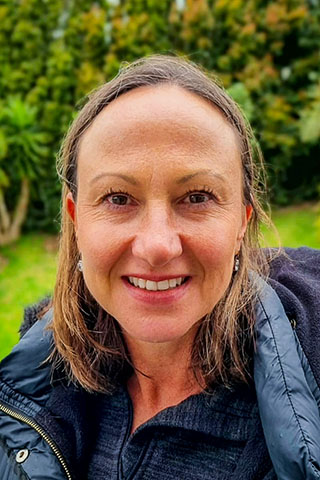
Dr. Caroline van Lingen brings over two decades of clinical experience to her boutique chiropractic practice. After completing her Master's Degree in Chiropractic at Durban University of Technology, Caroline focused her research on babies, specifically investigating spinal joint restrictions in infants with and without infantile colic.
This academic foundation, combined with nearly 20 years of hands-on experience treating babies and families in her hometown, has established her evidence-informed approach to family care.
Caroline holds the Webster Technique Certified — ICPA credential, reflecting her ongoing commitment to postgraduate education in pregnancy and perinatal chiropractic care. The Webster Technique is a specific chiropractic analysis and adjustment protocol certified through the International Chiropractic Paediatric Association (ICPA). It focuses on the sacrum and sacroiliac joints, along with the soft tissue of the uterine ligament system, with the aim of supporting neurobiomechanical function in the pelvic region during pregnancy. It is a gentle, low-force approach appropriate throughout pregnancy and is one part of a broader, collaborative approach to supporting the maternal body through the physical demands that growing a baby places upon it.
Caroline's commitment to ongoing professional development includes current participation in paediatric masterclasses and courses for a deeper understanding of the various causes of hip pain and dysfunction, ensuring her practice remains current with evolving research and best practice guidelines.
There is something quietly important that I want to share, because I think it matters for the kind of practitioner I am.
When I was pregnant with my own child, I did everything I was supposed to do. I was fit, strong, and active. I was eating well and sleeping carefully. I was seeing a chiropractor regularly. I was doing Pilates. I had read the research, prepared my body, and arrived at the end of my pregnancy feeling ready.
And then my baby had other ideas.
What followed was not the birth I had prepared for. My baby was not in a position to descend easily, and though labour was fully established, it found a long and quiet pause at a threshold I had not anticipated. There were hours of hard work, harder and longer than I had imagined and eventually, our baby arrived.
I tell this story because of what it changed in me. I had believed, at some level, that if you prepared well enough, birth would follow. What I learned in the most direct way possible is that birth belongs to itself. You can create the best possible conditions, you can support your body thoughtfully and thoroughly, and birth will still arrive on its own terms. That is not failure. It is not a reflection of how hard you tried or how well you prepared. It is simply how birth sometimes is.
That experience sits underneath everything I do in practice. When a patient tells me their birth did not go the way they had hoped, or that they were left feeling like their body had let them down. I understand that on every level. I know what it is to have ticked every box and still found yourself somewhere unexpected.
Sometimes babies decide how they come into the world. Even though it is your body, it is also theirs.
My passion for perinatal care is rooted in that experience, one that taught me, firsthand, how much the body is capable of, and how much a woman benefits from feeling genuinely supported through it. It is why this work matters so much to me.
- Dr Caroline van Lingen -